
 English
 Russian
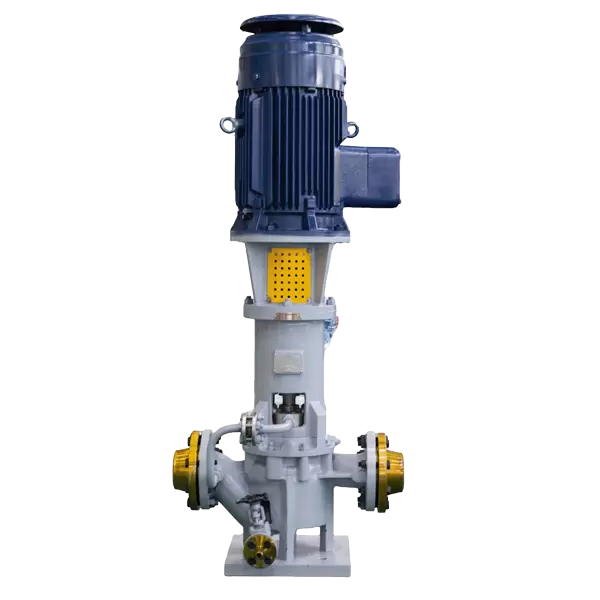
Why an API BB1 Pump Matters in Heavy-Duty Fluid Handling
In large-scale industrial operations, pump selection directly affects production continuity, energy consumption, and maintenance costs. An API BB1 pump is designed for demanding applications where high flow capacity, stable hydraulic performance, and long operating life are essential. It is particularly suitable for petroleum transportation, refinery operations, power generation, and large water circulation processes.
Unlike conventional centrifugal pumps, a between-bearings design provides structural support at both ends of the rotating assembly. This arrangement helps maintain shaft stability under demanding operating conditions. For facilities handling substantial liquid volumes, choosing a suitable BB1 centrifugal pump means balancing hydraulic efficiency, mechanical reliability, and long-term maintenance requirements rather than focusing on initial purchasing costs alone.
How the Double-Suction Impeller Improves Pump Performance
One important feature of an API 610 BB1 pump is its double-suction impeller. Liquid enters the impeller from both sides, helping balance axial thrust and reducing the load placed on critical rotating components. This hydraulic arrangement also supports high-flow operation while maintaining favorable suction performance.
For applications involving large pipeline networks or continuous water circulation, suction conditions deserve particular attention. Insufficient NPSH margin can lead to cavitation, vibration, and premature component wear. A properly selected double suction centrifugal pump helps address these concerns through its hydraulic design, although actual performance must always be verified against operating conditions.
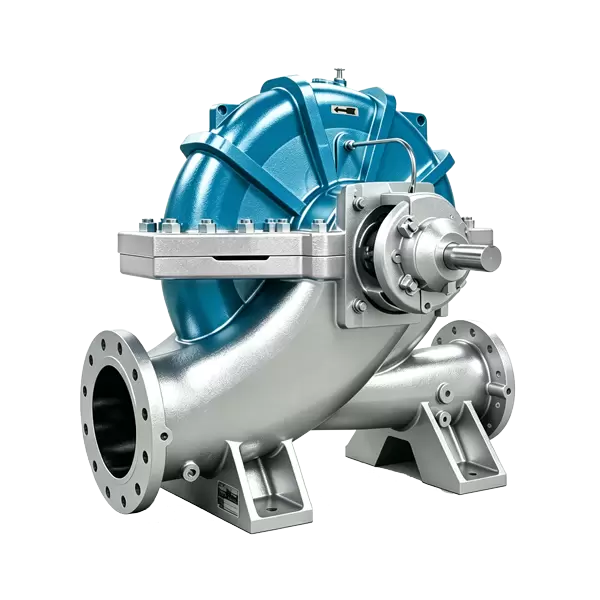
Horizontal Split Casing and Easier Maintenance
Maintenance accessibility is another major consideration when purchasing an industrial process pump. The horizontally split casing allows the upper casing section to be removed for internal inspection and rotor servicing. Importantly, this arrangement can reduce the need to disconnect suction and discharge pipelines or move the driver during routine maintenance.
This design is especially valuable in facilities where unexpected downtime can interrupt production or increase operating expenses. Engineers should also evaluate bearing accessibility, seal replacement requirements, lifting arrangements, and available maintenance space before installation.
Key Design Features and Their Industrial Benefits
Design feature | Operational benefit |
|---|---|
Double-suction impeller | Balances axial thrust and supports high flow |
Axially split casing | Simplifies internal inspection |
Between-bearings construction | Improves rotating assembly support |
Double-volute design | Helps reduce radial hydraulic loads |
Renewable wear rings | Supports economical component replacement |
Multiple lubrication options | Adapts to different operating requirements |
The shaft design also plays an important role in mechanical reliability. A rigid shaft with appropriately controlled bearing spans helps minimize deflection, supporting stable operation and reducing unnecessary stress on bearings and mechanical seals.
Applications Across Oil, Gas, Water and Power Industries
An industrial BB1 pump can serve different duties depending on its hydraulic configuration, materials, and operating conditions. In the oil and gas industry, common applications include crude oil transportation, refinery charge duties, and terminal transfer operations. These processes require dependable liquid movement under demanding pressure and flow conditions.
Water treatment and municipal infrastructure also benefit from high-capacity pumping equipment. Large waterworks, water diversion facilities, and cooling water circulation processes require consistent flow to maintain operational stability. In power generation, these pumps can support circulating water duties and boiler feed boosting applications.
Chemical processing and desalination facilities may require additional consideration of corrosion resistance, liquid temperature, and material compatibility. Selecting suitable casing and impeller materials is therefore essential for achieving reliable service.
What Should Buyers Evaluate Before Purchasing?
Selecting an API 610 BB1 pump requires more than comparing flow rate and discharge head. Buyers should first establish the actual operating point, including liquid properties, suction pressure, temperature, and required capacity. These details help determine whether the proposed hydraulic design can operate efficiently across the expected duty range.
The following considerations are particularly important:
Hydraulic requirements: Confirm flow rate, head, NPSH availability, and operating range.
Material compatibility: Match casing, impeller, and shaft materials to the pumped liquid.
Mechanical configuration: Review bearing arrangements, shaft rigidity, and sealing requirements.
Maintenance planning: Consider inspection access, spare parts, and wear component replacement.
Operating conditions: Evaluate temperature, pressure, vibration, and lubrication requirements.
Working with an experienced BB1 pump manufacturer can help buyers coordinate these factors before finalizing equipment specifications.
Why Choose Kalen for Industrial Pump Solutions?
Kalen focuses on industrial pumping equipment for demanding fluid transportation and process applications. With more than 60 years of pump manufacturing experience, the company provides customized pump solutions, technical support, and global shipping services.
Its BB1 pump design follows API 610 and ISO 13709 requirements, with hydraulic configurations developed for high-flow and medium-to-high-head applications. Depending on project requirements, the pump can be configured with different materials, bearing arrangements, and lubrication options.
For buyers evaluating a high-flow industrial centrifugal pump, engineering communication is essential. Providing accurate operating data at the quotation stage helps Kalen assess application requirements and recommend an appropriate configuration.
Frequently Asked Questions
Q1: What is an API BB1 pump used for?
It is primarily used for high-capacity liquid transportation in oil and gas, petrochemical, power generation, and water infrastructure applications.
Q2: What makes a BB1 pump different from conventional centrifugal pumps?
Its between-bearings construction, horizontally split casing, and typical double-suction impeller provide advantages in hydraulic performance, mechanical support, and maintenance accessibility.
Q3: Why is a double-suction impeller important?
It helps balance axial thrust, supports high flow rates, and provides favorable suction characteristics.
Q4: How can buyers select the right BB1 pump manufacturer?
Evaluate manufacturing experience, API 610 compliance, material selection, engineering capabilities, quality inspection, and after-sales technical support.
Q5: Can BB1 pumps be customized?
Yes. Hydraulic performance, construction materials, bearing arrangements, and auxiliary configurations can be considered according to specific project requirements.